What Is a Full Mouth Restoration?
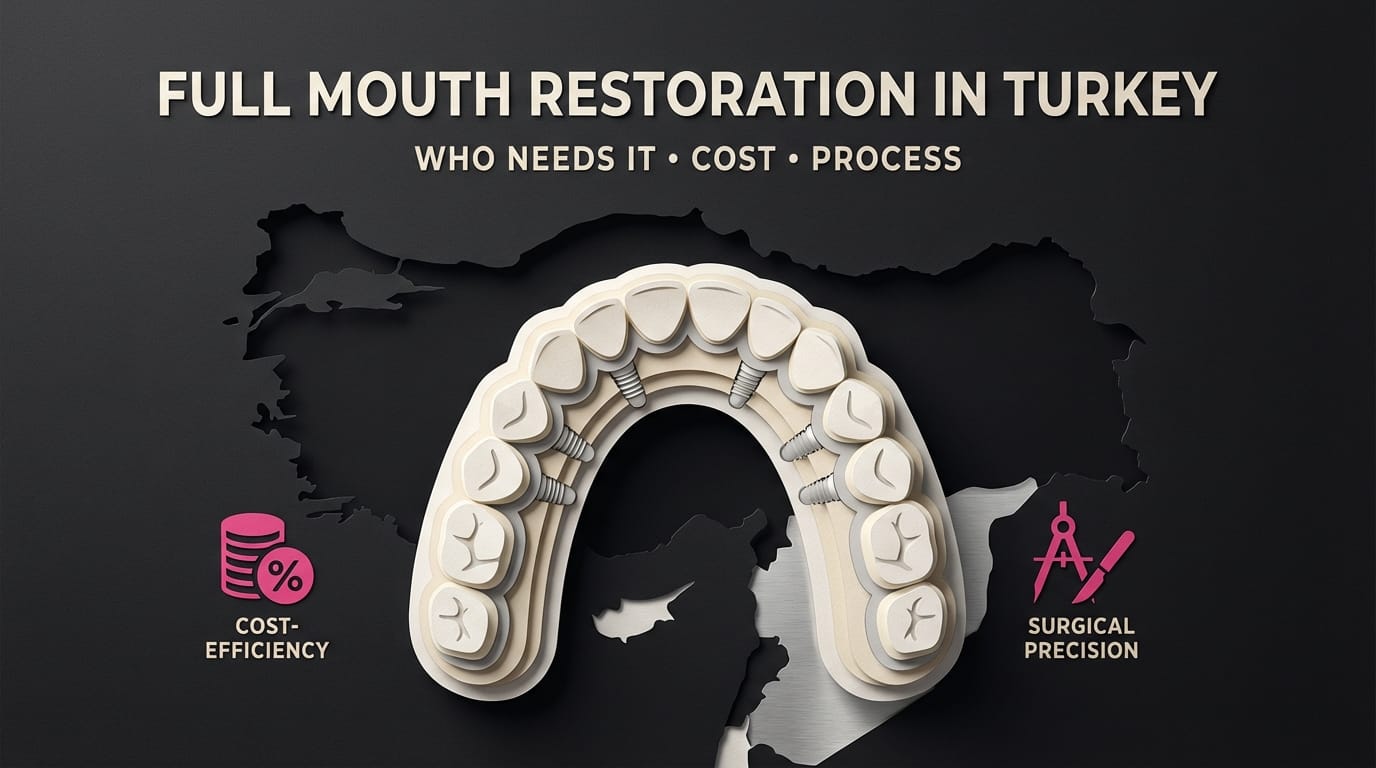
A full mouth restoration — sometimes called full mouth rehabilitation or reconstruction — is a comprehensive treatment plan that restores the function, health, and appearance of every tooth in both the upper and lower jaws. Unlike a purely cosmetic smile makeover that focuses primarily on visible teeth, a full mouth restoration addresses structural, functional, and aesthetic problems throughout the entire mouth.
This is not a single procedure. It is a coordinated plan that may involve several types of treatment working together: crowns, implants, bridges, veneers, extractions, bone grafting, gum treatment, and bite adjustment. The goal is to rebuild a stable, healthy, functional mouth that also looks natural and attractive.
Who Needs a Full Mouth Restoration?
Full mouth restoration is typically recommended for patients dealing with one or more of the following situations: extensive tooth decay affecting multiple teeth across both arches; severe wear from long-term teeth grinding (bruxism); multiple missing teeth causing functional and aesthetic problems; failing existing dental work such as old crowns, bridges, or fillings that need replacing; advanced gum disease that has damaged the supporting structures of the teeth; traumatic injury resulting in widespread damage; or a combination of these issues that collectively requires a comprehensive approach rather than isolated treatments.
The common thread is that the problems are too widespread to fix with one or two simple procedures. When multiple teeth in both arches need attention, a coordinated full mouth approach produces better results than treating each problem in isolation.
Why Turkey for Full Mouth Restoration?
Full mouth restorations are among the most expensive dental treatments available. In the UK, a comprehensive restoration involving crowns, implants, and potentially bone grafting can easily cost £20,000 to £50,000 or more. The same quality of treatment at Persona Smile in Antalya typically costs 50% to 70% less.
The cost difference is not due to inferior materials or less skilled dentists. Turkey’s lower operating costs — rent, staffing, laboratory fees — allow clinics to offer the same internationally certified materials and techniques at substantially lower prices. Our transparent pricing demonstrates this clearly.
Beyond cost, Turkey offers practical advantages for complex treatments. Our in-house dental laboratory enables rapid turnaround on restorations and real-time adjustments. Our state-of-the-art facilities include advanced diagnostic imaging and digital workflow technology that streamlines complex multi-stage treatments.
What Does Full Mouth Restoration Involve?
Phase 1: Comprehensive Assessment
Everything begins with a thorough clinical assessment. This includes full-mouth digital scanning, panoramic X-rays, CBCT imaging for implant planning, bite analysis, gum health assessment, and photographs. This diagnostic data forms the foundation of your personalised treatment plan.
During your initial consultation, our team will explain every element of the proposed treatment, the materials to be used, the expected timeline, and the cost.
Phase 2: Foundation Work
Before restorations can be placed, the foundation must be sound. This phase may include extracting teeth that cannot be saved, treating active gum disease, performing bone grafting where implants are needed but bone volume is insufficient, and addressing any infections or acute problems.
For patients requiring bone grafts or sinus lifts, this phase may add time to the overall treatment plan. The goal is to create the healthiest possible foundation for the restorations that follow.
Phase 3: Implant Placement
If implants are part of your plan, they are placed during this phase. Depending on the number and location of implants, this may be done in a single surgical session or staged across two sessions. Immediate temporary restorations can often be placed on the same day, giving you functional teeth while the implants integrate with the bone.
At Persona Smile, we use NTA (Swiss) implants from £355 and Straumann BLX implants from £700, both CE-marked and internationally certified.
Phase 4: Restoration
Once the foundation is stable and any implants have integrated, the final restorations are designed, manufactured, and fitted. This typically includes a combination of crowns (zirconia from £130 or E-max from £150), veneers (E-max from £180), and implant-supported bridges, all custom-crafted in our in-house laboratory.
Each restoration is individually designed for optimal fit, colour matching, and bite harmony. The entire arch is planned as a cohesive unit so that every tooth works in harmony with its neighbours.
Phase 5: Bite Refinement and Final Adjustments
After all restorations are placed, the bite is carefully refined to ensure even force distribution. This step is critical for long-term success and comfort. Minor adjustments are made until the bite feels natural and balanced.
How Much Does Full Mouth Restoration Cost in Turkey?
The cost varies significantly depending on the treatments involved. As a guide using Persona Smile pricing:
A restoration involving 20 zirconia crowns would cost from approximately £2,600. A restoration involving 20 E-max crowns would cost from approximately £3,000. A case requiring six implants plus 20 crowns would cost from approximately £4,730 to £7,200 depending on the implant brand. A full-arch All-on-4 solution for both jaws would cost from approximately £7,660 to £10,420 depending on the implant brand.
Compare these figures to UK costs where 20 crowns alone would typically cost £10,000 to £20,000, and it becomes clear why so many patients choose to have comprehensive treatment in Turkey.
Treatment Timeline
A full mouth restoration typically requires two visits to our clinic. The first visit, lasting 7 to 10 days, covers the assessment, any surgical procedures, tooth preparations, and temporary restorations. After a healing period of three to six months (spent at home), a second visit of 5 to 7 days is needed for the final permanent restorations.
Simpler cases that do not require implants can sometimes be completed in a single visit of 7 to 10 days. Your treatment plan will include a detailed timeline so you can plan accordingly.
Recovery and Aftercare
Recovery from a full mouth restoration depends on the specific procedures involved. Crown and veneer work typically involves minimal downtime — mild sensitivity for a few days. Implant surgery involves moderate discomfort for three to five days, manageable with prescribed medication.
Long-term success requires good oral hygiene, regular dental check-ups, and wearing a night guard if you grind your teeth. Our aftercare programme includes detailed home care instructions, follow-up communication, and coordination with your local dentist if needed.
Visit our FAQ page for detailed aftercare information, or contact us to discuss your specific situation.
Frequently Asked Questions
What is the difference between a smile makeover and a full mouth restoration?
A smile makeover is primarily cosmetic, focusing on the appearance of visible teeth. A full mouth restoration is both functional and cosmetic, addressing structural problems, bite issues, missing teeth, and oral health alongside aesthetics. Many patients need elements of both.
How long does a full mouth restoration last?
With proper care, dental implants can last a lifetime. Crowns and veneers typically last 15 to 20 years or more. The overall restoration should provide decades of function and aesthetics with proper maintenance and occasional component replacement as needed.
Can everything be done in one trip?
Cases that do not require implants can often be completed in a single visit. Cases involving implants typically require two visits with a three to six month healing period between them. We plan the most efficient timeline possible for each patient.
Am I too old for a full mouth restoration?
Age alone is not a barrier. General health, bone quality, and gum condition are more important factors than age. Many of our patients are in their 60s and 70s and achieve excellent results. A thorough assessment will determine your suitability.